Osteoporosis
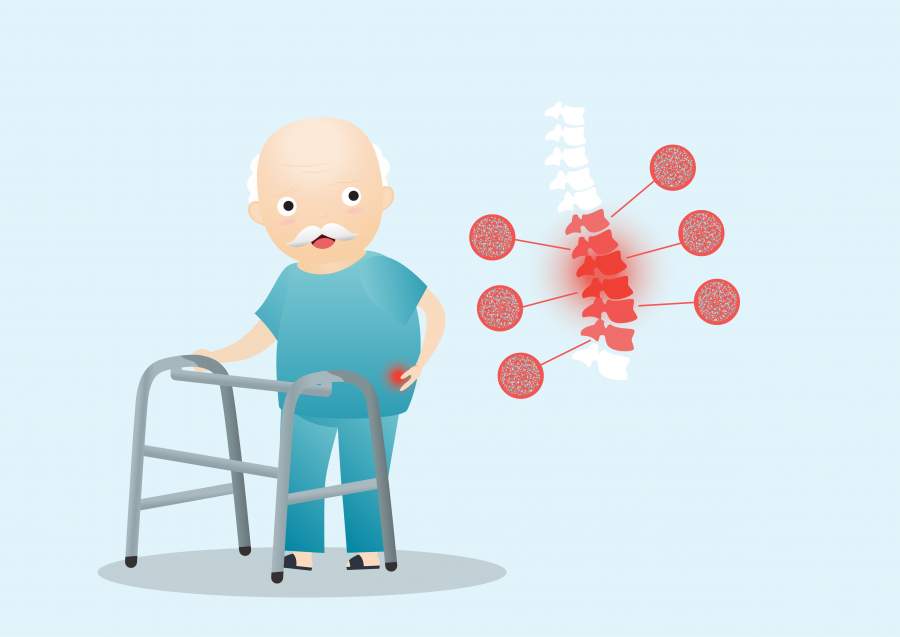
Osteoporosis is defined by the World Health Organization (WHO) as a bone mineral density of 2.5 standard deviations or more below the mean peak bone mass (average of young, healthy adults) as measured by dual-energy X-ray absorptiometry. The term “established osteoporosis” includes the presence of a fragility fracture. It is a medical condition that affects the bones, causing them to become weak and fragile and more likely to break (fracture).
Common form of osteoporosis:
1. Primary Osteoporosis:
Type I: It is also called as postmenopausal osteoporosis.
Type II: Type II or senile osteoporosis occurs after age 75 and is seen in both females and males at a ratio of 2:1.
2. Secondary Osteoporosis:
Secondary osteoporosis may arise at any age and can affect men and women equally.
This form results from chronic predisposing medical problems or disease, or prolonged use of medications such as glucocorticoids, when the disease is called steroid induced or glucocorticoid-induced osteoporosis.